I build ML systems judged by what they move — a loss ratio, an approval rate, a
completion curve. First-author publication in bioinformatics, recommendation systems
used by millions, and now decision intelligence at DEIN.
Based in Seoul — happiest shipping from anywhere with a good view.
The part of ML that's easiest to skip is the last mile: making a model actually change a
decision. That's the only version I find worth doing. Right now that's decision
intelligence at DEIN — building ML for insurance and loan judgments measured by loss
ratio and approval rate, not accuracy on a held-out set.
I've worked across applied ML — recommendation and knowledge tracing used by millions,
computer vision on real construction sites, and peptide-identification research I
published as first author. The throughline isn't one technique; it's carrying a problem
from "no one's framed this yet" to something that ships and holds up in the real world.
The domain keeps changing — bioinformatics, edtech, fintech — but the question doesn't:
how does something that works in a notebook move something real in the world?
Trajectory
2026Joined DEIN (formerly Ailys) to build decision intelligence for consumer lending.
2025
Published NovoRank as first author in J. Proteome Res.; moved from edtech
into insurance and loan ML at Ailys.
2024Super Rookie Award at TmaxEduAI — the company's sole honor for a first-year employee.
2023Joined TmaxEduAI to build knowledge tracing and recommendation for 2M+ learners.
2022
Presented NovoRank at the 70th ASMS Conference in Minneapolis; finished the M.S. in
Artificial Intelligence at Hanyang.
2020Began the M.S. at Hanyang, joining Prof. Paek's bioinformatics lab.
2019
First ML research at Inha's Construction Systems Lab; gave an oral presentation at
KICEM.
2014Started a B.S. in Civil Engineering at Inha, later adding a Software Convergence double major.
Not on the resume, but part of the picture —
more about me →
Designing data schemas and KPI definitions for consumer-lending products at partner
banks across Southeast Asia, and building an LLM agent that compiles
natural-language specifications into executable data logic.
Ailys (now DEIN) — Data Scientist
Apr 2025 – Jul 2026
Built ML for insurance risk and loan approval decisions on the DEIN platform —
judged by loss ratio and net interest margin, not accuracy alone.
TmaxEduAI — AI Engineer
Jan 2023 – Nov 2024
Built knowledge tracing and recommendation systems serving 2M+ learners — lifting
course enrollment 5% and content completion 25% — shipped via Airflow pipelines.
Awarded the Super Rookie Award, 2024 — the company's sole company-wide honor for a
first-year employee.
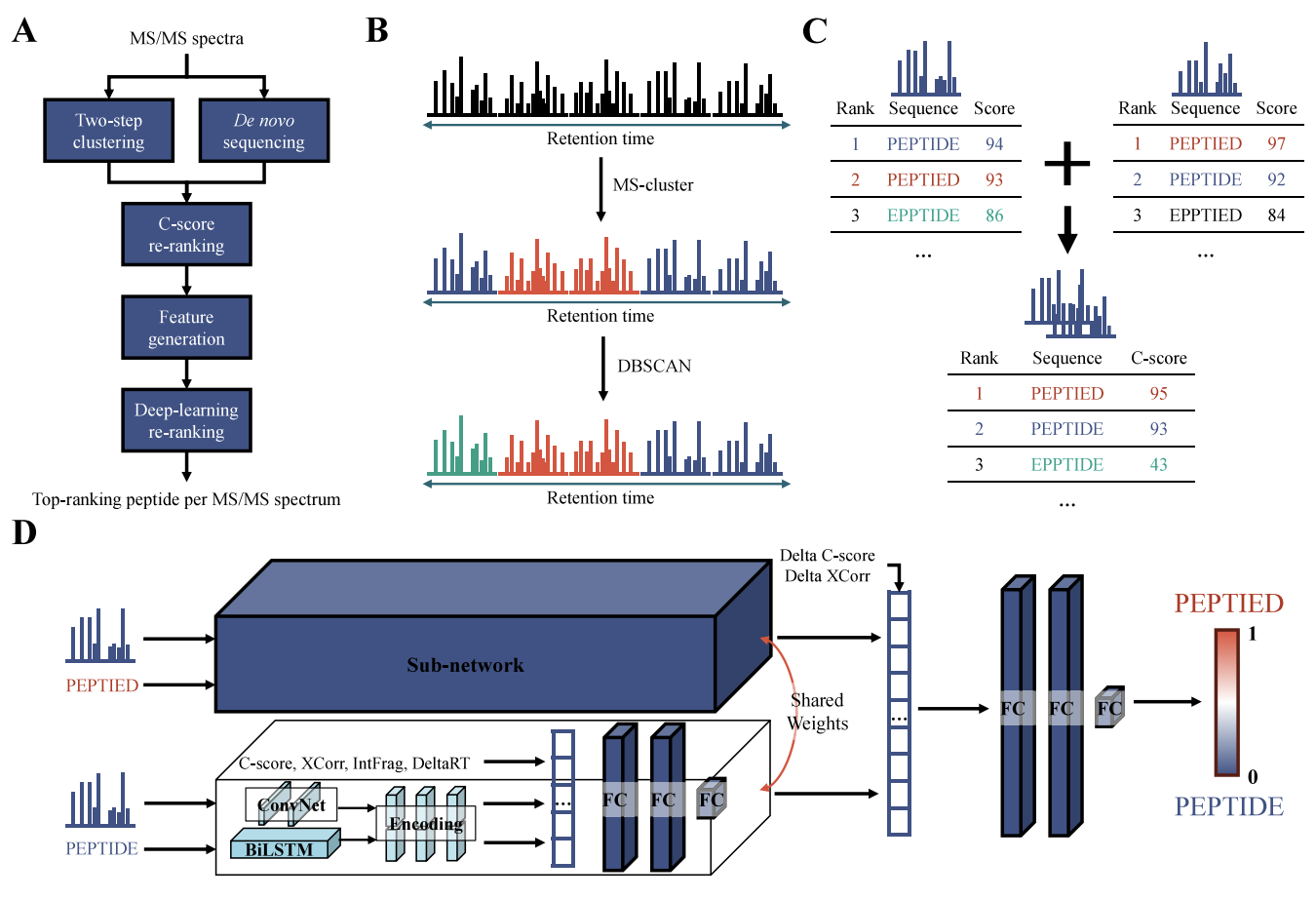
Designed ML/DL-based post-processing tools for reranking and rescoring, lifting
average recall and precision by 4.5% and 4.6% across three benchmark
de novo sequencing tools — published as first author in
J. Proteome Res. (2025).
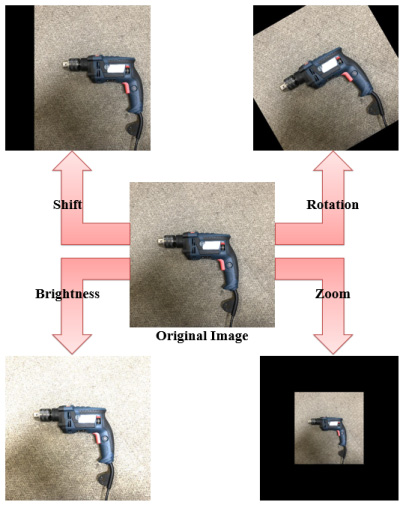
Developed image classification and object detection models to detect hazardous
objects in indoor construction environments, raising CNN accuracy from 85.7% to
87.6% through targeted image augmentation.
04. Publications
NovoRank: Refinement for De Novo Peptide Sequencing Based on Spectral Clustering and
Deep Learning
Jangho Seo, Seunghyuk Choi, Eunok Paek — J. Proteome Res. 2025, 24, 2,
903–910
Post-Processing Framework Using Deep Learning to Improve De Novo Peptide
Sequencing Results
Jun 2022
Poster · 70th ASMS Conference on Mass Spectrometry and Allied Topics, Minneapolis, MN
Image Augmentation for Small Object Detection on Indoor Construction Site
2019
Oral presentation · Korea Institute of Construction Engineering and Management
(KICEM), Goyang, Korea
05. Projects
Featured
Decision Intelligence
Decision Intelligence · Insurance & Loan
At DEIN (formerly Ailys) I build ML judged by business KPIs, not accuracy on a
held-out set — an insurance disease-risk model and loan reject inference that
expanded approvals with no change in delinquency.
Conventional de novo peptide sequencing tools score spectra in isolation
and frequently misidentify peptides. I built a two-step clustering and deep
learning re-ranking pipeline that cross-checks candidates against similar spectra.
Course recommendations for a 2M+ user platform were generic and didn't reflect
learner progress. I built a deep learning recommendation model on sequential
interaction data and shipped it through an Airflow pipeline, lifting course
enrollment (CVR) by 5% and content
completion by 25%.
Recognizing small hazard objects on construction sites is data-hungry, but labeled
images are scarce. I studied which image-augmentation strategies actually help,
lifting a CNN's accuracy from
85.7% to 87.6% — and found rotation
hurts more than it helps for these objects.